




MPA Tightens Acrylic Tunnel Inspection Rules




On August 1, 2026, a new inspection requirement takes effect for giant acrylic tunnels used in public aquariums and marine theme parks under Singapore Maritime and Port Authority (MPA) rules. The change centers on optical distortion control, but its practical significance extends further into testing, certification, procurement review, shipping documentation, and delivery arrangements for both newly signed orders and goods already in transit. For manufacturers, buyers, inspection bodies, and supply chain participants, this is worth watching because it turns a visual-performance metric into a mandatory compliance item tied directly to third-party reporting.
What the circular formally changes
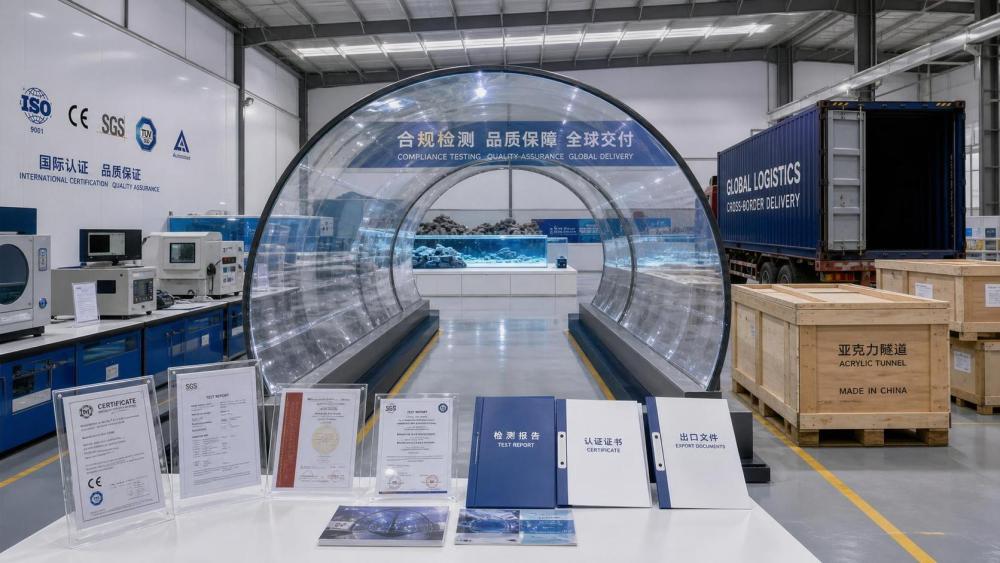
According to the provided event summary, the Maritime and Port Authority of Singapore issued Technical Circular No. TC-2026-07 on July 6, 2026 for Giant Acrylic Tunnels used in public aquariums and marine theme parks.
The circular adds Optical Distortion Rate (ODR) as a mandatory test item. The requirement is that the ODR for the full tunnel curved surface must be no more than 0.15% at an observation distance of 2 meters.
The summary also states that the test report must be issued by an MPA-recognized third-party body, with examples including SGS and TUV SUD Singapore, and that the report must carry CNAS or ILAC-MRA marks.
The standard takes effect on August 1, 2026 and applies to all newly signed orders as well as goods already in transit.
Where the pressure points now appear in the business chain
Manufacturing and fabrication decisions may face earlier compliance screening
From an industry perspective, manufacturers and processors of giant acrylic tunnel structures are among the first parties likely to feel the impact because the new rule introduces a measurable optical-performance threshold that must be verified through formal testing. The effect is not limited to final inspection. It may influence when producers lock technical specifications, how they prepare test-ready samples or finished surfaces, and how they schedule third-party verification before shipment or delivery milestones.
What deserves closer attention is the documentary side of compliance. If ODR is now a mandatory item, then technical files, quality records, and handover documents linked to the tunnel surface may need to align with the third-party report requirement rather than relying only on internal quality statements.
Buyers and project owners may need to tighten specification alignment
Procurement teams, project owners, and contractors involved in aquarium or marine theme park projects may also be affected because acceptance criteria are no longer only a matter of product geometry or structural delivery. Analysis shows that tender documents, purchase specifications, and inspection clauses may now need to reflect the ODR threshold, the 2-meter observation condition, and the requirement for reports from MPA-recognized bodies carrying CNAS or ILAC-MRA marks.
For these parties, the main issue is not only whether a tunnel can be supplied, but whether the supplied product can pass acceptance with the required paperwork in place. This makes pre-award technical alignment and document review more important in ongoing and newly signed transactions.
Testing and certification service providers may become a key timing factor
Inspection agencies and certification-related service providers may become more central in transaction execution because the rule explicitly ties compliance to a report issued by an MPA-recognized third party. Observably, this can shift part of the execution risk from pure manufacturing capability to testing access, report format, and recognition status.
For companies arranging exports or cross-border project delivery, the practical point to monitor is whether the selected testing body and report presentation fully match the rule as described in the circular summary. In this context, documentation readiness can become as important as physical readiness.
Logistics and delivery planning now carry an added document risk
The rule applies not only to new contracts but also to goods already in transit. Analysis shows that this is likely to matter for logistics coordinators, exporters, and delivery managers because shipments moving under earlier assumptions may now face additional document review or testing-related checks before final acceptance. The change therefore has potential implications for shipment sequencing, customs-facing document packages where applicable, and project delivery coordination with end users.
Even without further execution detail in the input, the immediate signal is clear: delivery planning can no longer be separated from report availability and report recognition.
What companies should verify right now
Check whether contract language still matches the new inspection trigger
Companies handling relevant tunnel projects should review whether existing and pending contract documents clearly reflect the mandatory ODR requirement, the observation distance condition, and the accepted third-party reporting path. This is especially relevant where technical annexes were finalized before the August 1, 2026 effective date.
Review report pathways before shipment or acceptance milestones
What deserves closer attention is whether the selected testing route leads to a report that satisfies both recognition and marking requirements stated in the summary. If a company relies on third-party verification late in the process, any mismatch in report format or issuing body could affect acceptance timing.
Reassess in-transit orders and handover documentation
Because the standard also applies to goods already in transit, businesses should not assume that pre-shipment status alone removes compliance exposure. A practical review point is whether in-transit goods already have, or can still obtain, the required supporting report and related technical documentation before handover or project acceptance.
Track later wording in procurement and official implementation materials
The input does not provide further detail on how the rule will be applied in specific project scenarios. For that reason, it is more appropriate to understand current company action as focused on verification and monitoring. Businesses should watch for any later clarification in procurement specifications, acceptance documents, or official implementation language that may define how this testing requirement is checked in practice.
How this should be read at this stage
Analysis shows that this is better understood as an already landed compliance change rather than a distant policy signal, because the effective date is specified and the summary describes a concrete mandatory test item, a numerical threshold, and a defined reporting route. At the same time, observably, the market still needs to watch how the requirement is applied in operational detail, especially for in-transit goods and document review at the acceptance stage.
In other words, the rule itself appears settled in principle, while its day-to-day execution still warrants close monitoring through project documents, third-party testing practice, and market feedback.
The practical takeaway for the market
The immediate significance of this development lies in turning optical distortion performance into a formal gate for compliance, documentation, and delivery in the giant acrylic tunnel segment. That matters not only for product quality control, but also for procurement wording, recognized testing access, and transaction timing.
From an industry perspective, it is more appropriate to read this update as a concrete execution signal with direct short-term relevance, while remaining cautious about assumptions beyond the facts provided. The next phase worth watching is how certification practice, bid documents, and project acceptance language absorb the new requirement after August 1, 2026.
Basis of this article and what still needs verification
This article is generated from the user-provided news title, event date, and event summary. The confirmed facts used here are limited to the stated MPA circular, its effective date, the mandatory ODR threshold, the 2-meter observation condition, the requirement for an MPA-recognized third-party report, the mention of CNAS or ILAC-MRA marks, and the applicability to new orders and in-transit goods.
For events of this type, relevant source categories usually include official notices, releases from regulatory authorities, trade or customs authorities, industry association materials, standard-setting documents, and reporting by established sector media. No specific official source link was provided in the input, so the exact official link remains to be independently verified.
Further monitoring is still needed on implementation detail, certification interpretation, tender document updates, market feedback, and how affected companies execute the new requirement in procurement and delivery practice.
Related News
- Public Aquarium Project Planning: Key Design Phases, Risks, and Budget ControlsSep 21, 2026Public aquarium project planning: explore design phases, critical risks, and budget controls for resilient, efficient facilities that protect animal welfare and operational success.
- How to Evaluate an Aquarium Safety Engineering Supplier for Public InstallationsSep 19, 2026Choose an aquarium safety engineering supplier with confidence. Learn how to assess resilient life support, safe maintenance access, commissioning, and long-term support for public installations.
- MPA Tightens Acrylic Tunnel Inspection RulesJul 07, 2026MPA Tightens Acrylic Tunnel Inspection Rules: learn how Singapore’s new ODR testing and third-party certification requirements could affect contracts, in-transit shipments, compliance, and delivery timelines.
- Singapore MPA Tightens Acrylic Tunnel Import ChecksJul 06, 2026Singapore MPA Tightens Acrylic Tunnel Import Checks with a new 0.15% optical distortion limit. Learn the compliance risks, supplier screening impact, and what exporters must do now.
Related Industries
Trending in Tech
 Water Quality Engineering for Canadian Public Aquariums: Design Criteria and RisksOct 06, 2026Aquarium Water Quality Engineering Canada: explore resilient public aquarium LSS design, source-water risks, redundancy, monitoring, and compliance strategies.
 Choosing a Reptile Temperature Controller for Day-Night Heat CyclesOct 05, 2026Reptile temperature controller guide: compare thermostats, probe placement, and day-night heat cycles for a safer, stable terrarium.
 How to Specify Temperature Control for Automated Terrarium SystemsOct 04, 2026Automated terrarium systems temperature control: learn how to specify safe, stable thermal zones, sensors, PID logic, and fault protection for reliable habitats.

Weekly Insights
Stay ahead with our curated technology reports delivered every Monday.