




Saltwater Aquarium Systems: Budget, Equipment, and Upgrade Planning




Why do Saltwater aquarium systems need a different buying strategy?
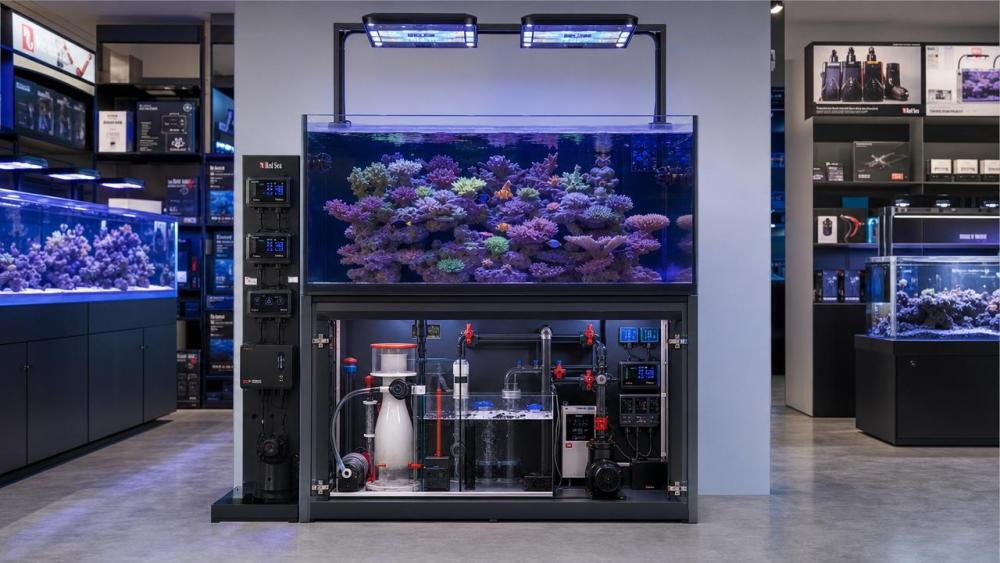
Saltwater aquarium systems look premium, but the real value sits behind the glass.
Water stability, livestock survival, lighting performance, and serviceability usually decide whether a project stays profitable.
That is why budget planning for marine installations should start with life support logic, not decoration.
In practical terms, Saltwater aquarium systems combine circulation, biological filtration, protein skimming, salinity control, lighting, and monitoring into one operating environment.
If one link is undersized, the whole display can become unstable.
This matters even more in commercial settings, where visual consistency and animal welfare must align with maintenance budgets.
AEPS often frames these decisions through system integration rather than isolated products.
That perspective helps when comparing protein skimmers, inverter pumps, UV sterilizers, reef lighting, and control components as one connected package.
What should be included in the initial budget, beyond the tank itself?
A common mistake is treating the aquarium tank as the main cost center.
For most Saltwater aquarium systems, the tank is only one part of the capital plan.
The larger spending categories usually sit in filtration, circulation, lighting, controls, installation, and long-term consumables.
More advanced reef-oriented systems also require tighter spectrum management, stronger flow design, and higher redundancy.
A practical budgeting structure often includes the following:
- Display tank and stand, including low-iron glass if visual clarity is a priority.
- Sump, plumbing, valves, overflow design, and installation hardware.
- Protein skimmer, mechanical filtration, biological media, and optional UV sterilization.
- Return pumps, wave pumps, and backup power considerations.
- Marine LED lighting with coral spectrum control where reef growth matters.
- Auto top-off, salinity tools, temperature control, and monitoring instruments.
- Salt mix, test kits, replacement media, and maintenance labor.
The hidden costs usually appear after commissioning.
Electricity demand, replacement parts, imported consumables, and emergency livestock protection can change total ownership cost quickly.
A cheaper build can therefore become more expensive within one operating cycle.
How do you judge which equipment matters most in Saltwater aquarium systems?
Not every component carries the same operational risk.
The best way to compare equipment is to rank items by their effect on water quality, biological stability, and downtime exposure.
For many installations, three categories deserve close attention.
Filtration and skimming
Protein skimmers remove dissolved organic waste before it turns into a heavier nutrient load.
Biological media then supports nitrification, helping convert ammonia into less harmful compounds.
If the skimmer is undersized, water clarity and nutrient control often decline first.
Flow and pump design
Inverter return pumps can improve energy control and flow tuning.
Wave pumps affect detritus suspension, coral health, and oxygen exchange.
Poor circulation often causes dead zones, uneven temperature, and localized nutrient buildup.
Lighting and controls
Fish-only systems can accept simpler lighting strategies.
Coral-focused Saltwater aquarium systems need much tighter control in the 420-460nm range, output spread, and daily intensity programming.
AEPS content often emphasizes that lighting should be evaluated with biology in mind, not only with showroom brightness.
A quick judging table helps separate essential spend from optional upgrades
This kind of comparison works better than checking price tags alone.
Is it smarter to buy for current demand or future expansion?
The answer depends on which part of the system may need to scale later.
Some equipment is easy to upgrade in stages.
Other parts become costly once the installation is live.
As a rule, hard infrastructure should usually be sized with expansion in mind.
That includes sump space, pipe routing, cabinet ventilation, electrical allocation, drainage logic, and controller capacity.
These items are disruptive to rebuild later.
By contrast, lighting modules, dosing additions, media volume, and some pumps can be upgraded in steps.
More cautious planning often follows this pattern:
- Buy structural capacity slightly above present load.
- Start with equipment that matches the current bio-load.
- Reserve control ports and plumbing points for later devices.
- Confirm spare parts and upgrade compatibility from the same supplier line.
This approach protects cash flow without creating an upgrade trap.
It also reflects how many commercial habitat technologies are evaluated across AEPS categories, where integration and later compatibility matter as much as launch cost.
Where do budget overruns and performance problems usually begin?
They rarely begin with one dramatic failure.
More often, problems start with small underestimations that compound over time.
In Saltwater aquarium systems, several patterns appear again and again.
Oversimplified livestock assumptions
A fish-only setup and a coral-heavy reef display do not share the same equipment stress profile.
If the stocking plan changes later, the original system may become undersized quickly.
Ignoring maintenance access
A skimmer that cannot be removed easily, or a UV unit buried behind fixed piping, raises labor cost every month.
Poor service access is one of the most expensive design errors.
Chasing low upfront pricing
Low-cost pumps with unstable output, weak seals, or poor controller support can damage system reliability.
The same applies to low-grade lighting that looks acceptable at installation, then loses spectrum consistency later.
Leaving no room for monitoring
Even a modest monitoring layer can reduce risk.
Temperature alerts, salinity checks, pump alarms, and lighting schedules often prevent bigger losses.
AEPS regularly highlights this broader point across aquatic and habitat systems: stability is designed, not improvised.
What is a sensible next step when comparing suppliers and upgrade paths?
A useful comparison process starts with questions, not brochures.
Before selecting Saltwater aquarium systems, define the expected livestock type, display purpose, maintenance frequency, utility limits, and future scaling target.
Then compare suppliers against the same decision frame.
- Ask for operating parameters, not just marketing claims.
- Request realistic power use and consumable schedules.
- Check whether spare parts are standardized or proprietary.
- Review how the system handles bio-load growth and lighting upgrades.
- Confirm maintenance access, service intervals, and installation constraints.
The strongest buying decisions usually come from matching equipment logic with project life cycle.
That means balancing visual goals, biological reliability, and cost discipline from day one.
If a system appears affordable but cannot scale, service easily, or maintain water quality, it is not truly economical.
A better next move is to build a comparison sheet around life support performance, maintenance burden, operating cost, and upgrade compatibility.
That creates a clearer basis for shortlisting options and reduces expensive corrections after installation.
Related News
- Choosing an Aquarium Ozone Treatment System: Sizing, ORP Control, and SafetyOct 24, 2026Choose an aquarium ozone treatment system with confidence. Explore sizing, ORP control, and essential safety measures to protect livestock and compare suppliers before you buy.
- What Does a Coral Dosing System Cost to Buy, Run, and Maintain?Oct 10, 2026Coral dosing systems cost explained: compare purchase, operating, maintenance, accuracy, and five-year ownership costs to choose the right reef dosing solution.
- Selecting Multi-Channel Reef Dosing Systems for Stable Alkalinity and Trace ElementsOct 03, 2026Multi-channel reef dosing systems for stable alkalinity and trace elements: explore accuracy, independent channels, calibration, chemical safety, and monitoring features.
- How to Plan Filtration, Life Support, and Staffing for Large Public AquariumsOct 01, 2026Large public aquarium operations: plan resilient filtration, life support, monitoring, and staffing to protect animal welfare and improve operational reliability.
Related Industries
Trending in Tech
 Commercial Aquarium Life Support Systems: Sizing for Peak BioloadsOct 26, 2026Size commercial aquarium life support systems for peak bioloads. Learn how to match filtration, oxygen, flow, and backup capacity to real demands—and compare suppliers with confidence.
 Legal Gaps Expose Global Wildlife Supply Chains to Illegal Pet Trade RisksOct 26, 2026Wildlife supply chain gaps expose reptile and amphibian trade to illegal pet trafficking. Explore CITES compliance risks and practical checks to help protect your business.
 Commercial Aquarium LED Lighting: Evaluating PAR and Coverage in Deep Reef TanksOct 25, 2026Compare commercial aquarium LED lighting with depth-specific PAR maps, spectrum, and coverage data. Discover how to reduce hotspots and choose the right layout for deep reef tanks.
Weekly Insights
Stay ahead with our curated technology reports delivered every Monday.