




What Should a Marine Aquarium Maintenance Contract Include?




A marine aquarium maintenance contract should define far more than “regular cleaning.” In a commercial display, public-facing reef system, hospitality installation, or high-value private aquarium, unclear service terms can leave critical gaps around water testing, livestock care, equipment failures, emergency response, and replacement costs. The result may be declining coral health, fish losses, algae outbreaks, avoidable downtime, or disputes over who was responsible for acting.
The practical answer to what should be included in a marine aquarium maintenance contract is: a written scope of work, measurable service routines, equipment and livestock responsibilities, reporting requirements, emergency procedures, exclusions, and commercial terms. The agreement should make it possible for both the operator and service provider to answer a simple question at any time: what is being monitored, what action is required, who approves additional work, and what happens when the system becomes unstable?
Start with the system being maintained
A contract cannot set meaningful expectations without identifying the aquarium and its supporting systems. A compact fish-only display and a coral-dominant reef with automated dosing, reactors, chillers, ultraviolet sterilization, and remote monitoring do not carry the same maintenance workload or risk profile.
The opening section should record the installed system as it exists at the start of the agreement. This creates a baseline and prevents later arguments over whether a component was part of the maintenance provider’s responsibility.
- Display tank dimensions, approximate operating volume, sump capacity, and connected tanks.
- Livestock category: fish-only, fish-with-live-rock, mixed reef, soft coral, large-polyp stony coral, small-polyp stony coral, or quarantine/holding system.
- Life support equipment, including return pumps, circulation pumps, protein skimmers, mechanical filtration, biological media chambers, heaters, chillers, UV units, ozone equipment where used, dosing pumps, auto top-off systems, and controllers.
- Lighting fixtures, photoperiod settings, spectrum programs, mounting arrangement, and any lunar-cycle settings.
- Water source and treatment equipment, such as reverse osmosis/deionization units, storage tanks, salt-mixing vessels, and delivery pumps.
- Electrical circuits, backup power arrangements, leak detection, alarms, remote access, and any building-management interface.
It is also sensible to record known defects, aging equipment, incomplete installations, and components excluded from service. A maintenance company should not be presumed to warrant a failing chiller, poorly sized skimmer, cracked pipe fitting, or unreliable electrical supply simply because it performs routine visits.
Define routine visit frequency and the work performed
“Weekly maintenance” is too vague on its own. One party may interpret it as glass cleaning and feeding; the other may expect water changes, pump servicing, testing, dosing adjustments, and detailed reports. The contract should describe the work included at each visit and separate it from periodic tasks that occur monthly, quarterly, or when needed.
For example, routine service can include visual inspection of livestock, cleaning accessible viewing panels, removing detritus from agreed areas, checking water level and salinity, inspecting skimmer performance, emptying or cleaning the collection cup, replacing consumable filter media, and reviewing alarms. The exact list should match the system design rather than being copied from a generic freshwater aquarium service schedule.
Water changes require particular clarity. The contract should state whether water changes are included, the planned frequency or trigger conditions, who supplies saltwater, how replacement water is prepared, whether source-water quality is tested, and whether the quoted price includes salt mix, filters, labor, transport, and wastewater handling. In marine systems, a delayed or poorly mixed water change can create a problem rather than solve one.
A useful contract also addresses missed visits. It should explain how site closures, restricted access, holidays, severe weather, or building security rules affect the schedule and whether the provider will make up the visit within a specified window.
Set water-quality testing and response expectations
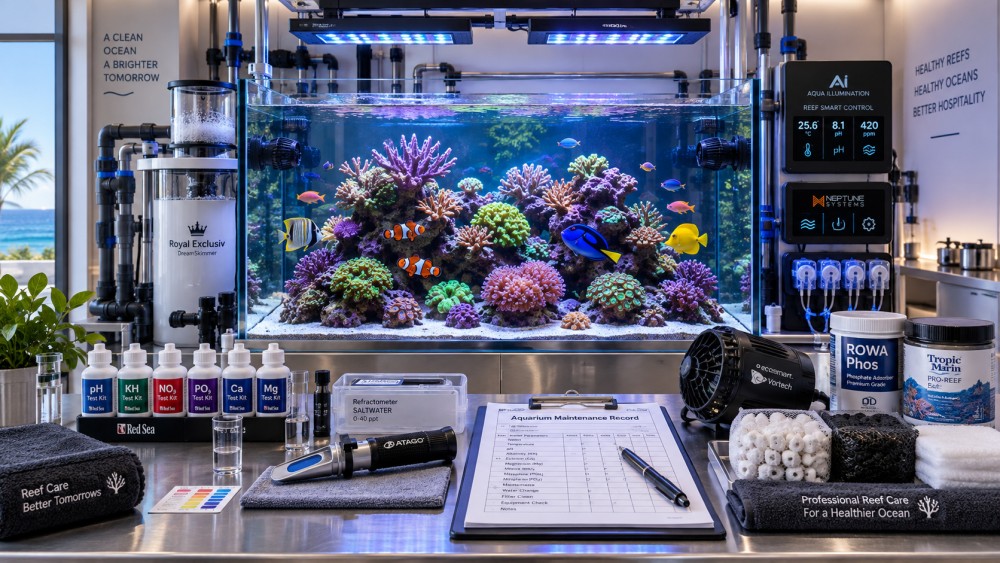
Testing is not valuable merely because a technician writes down numbers. Its purpose is to identify movement away from stable conditions early enough to correct it. The agreement should name the parameters to be checked, the expected testing frequency, the equipment or method used where relevant, and the action process when readings fall outside the agreed operating range.
For a marine aquarium, the commonly monitored parameters may include temperature, specific gravity or salinity, pH, alkalinity, ammonia, nitrite, nitrate, phosphate, calcium, magnesium, and dissolved oxygen where system conditions justify it. Reef systems often need closer attention to alkalinity, calcium, magnesium, nutrient balance, and lighting-related coral response. A fish-only system may place greater operational emphasis on ammonia control, oxygenation, pathogen risk, and stable salinity.
The contract does not need to promise that every reading will remain identical. Biological systems fluctuate, and a single test result can be affected by recent feeding, dosing, evaporation, sample handling, or equipment calibration. Instead, it should define an escalation process. This may include retesting, checking probes and refractometers, inspecting the source of dosing or top-off water, testing for equipment failure, recommending a water change, pausing a dosing program, or informing the designated site contact.
Use target ranges carefully
Target ranges can be included in an appendix or maintenance plan, especially where the installation has an established husbandry protocol. They should be treated as operating references, not as an excuse to make abrupt chemical corrections. A contract that says “maintain perfect water quality” is unhelpful because it gives neither party a workable standard. Better wording identifies the target conditions, recognizes normal variation, and requires documented corrective action when a meaningful deviation persists or presents a welfare risk.
Clarify livestock care without creating false guarantees
Marine livestock introduces responsibilities that equipment-only maintenance contracts do not address. Feeding, quarantine, acclimation, disease observation, mortality removal, coral placement, and compatibility decisions can all affect system outcomes. These tasks should be assigned expressly.
The agreement should state who provides food and supplements, who authorizes livestock purchases, who performs daily feeding between service visits, and who has authority to remove visibly ill or dead animals. Where the site has staff, the provider may need to give simple operating instructions: avoid overfeeding, do not add untreated tap water, do not adjust controller settings, and report leaks, unusual odors, cloudiness, fish gasping, or repeated alarm notifications promptly.
Livestock mortality needs careful language. A responsible provider can commit to appropriate inspection, observation, husbandry actions within the agreed scope, and timely communication. It should not automatically become financially responsible for every loss. Animals can be affected by pre-existing disease, aggression, transportation stress, unauthorized additions, power interruptions, building chemical exposure, or actions taken outside the service provider’s control. The contract should explain how mortality is documented, how replacement decisions are approved, and which party bears replacement costs.
Assign responsibility for equipment, consumables, and repairs
Routine maintenance and equipment repair are related but different services. A technician may clean a return pump, notice reduced flow, and recommend replacement; that does not necessarily mean the replacement pump, installation labor, or emergency callout is included in the base fee.
Separate routine consumables from capital components. Consumables might include filter socks or pads, carbon, phosphate media, resins, salt mix, test reagents, calibration fluids, dosing chemicals, UV lamps, and reverse osmosis cartridges. Their supply can be included, billed at cost, billed with an agreed handling charge, or purchased directly by the owner. What matters is that the arrangement is visible before stocks run out.
For repairs, the contract should identify an authorization threshold. Small corrective work may be completed during a visit up to a stated value, while larger expenses require approval from a named contact. It should also cover what happens when immediate action is needed to prevent flood damage, loss of circulation, overheating, or an oxygen emergency. An emergency authorization limit can prevent a technician from having to wait for approval while the aquarium is deteriorating.
Emergency response must be operational, not promotional
Marine life support systems can become critical quickly when circulation stops, temperature moves outside the safe operating range, a plumbing leak occurs, or automated top-off and dosing systems malfunction. Emergency wording should be concrete enough to guide action at 2 a.m., not just state that “support is available.”
- Define what counts as an emergency, such as major leaks, complete pump failure, loss of heating or cooling, power outage, suspected toxic contamination, major livestock distress, or controller failure affecting life support.
- State the contact method, monitoring hours, expected callback arrangement, and whether on-site attendance is included or charged separately.
- Name the people authorized to approve emergency work and provide access to the installation.
- Describe owner responsibilities, including maintaining access, supplying current contact details, and notifying the provider of building power failures or construction activity near the system.
- Identify available backup measures, such as battery air pumps, generator connection procedures, spare pumps, temporary aeration, or portable heating and cooling equipment, where installed.
Response time should be framed realistically. Travel time, site access, weather, road conditions, and the availability of replacement parts may affect physical attendance. A contract can still require prompt remote triage, clear communication, and reasonable efforts to stabilize the system. It should not imply guaranteed recovery from every emergency.
Require service records that help the next decision
A maintenance report should be more than a checklist with every field marked “OK.” The useful record identifies what was tested, what was cleaned or replaced, visible changes in livestock condition, equipment observations, stock levels, unresolved risks, and actions needing approval.
Reports are especially important where several people interact with the aquarium: facility management, an internal animal-care team, contractors, security staff, and external maintenance personnel. A dated record can show whether salinity drift began after an auto top-off issue, whether phosphate media was exhausted, whether a pump had been noisy across several visits, or whether an alarm was repeatedly ignored.
The contract should specify who receives reports, how quickly they are sent, and whether urgent findings are communicated separately from the normal visit report. Digital photographs may be useful where access conditions permit, but the agreement should address any site restrictions on photography.
Protect both parties with boundaries and change-control terms
The commercial section should identify the contract term, renewal or termination notice, scheduled visit price, payment timing, tax treatment where applicable, and the rates for extra labor, after-hours work, travel, and replacement equipment installation. It should also state whether service pricing may be reviewed when the aquarium is expanded, livestock density changes substantially, operating hours change, or the system condition differs from the original assessment.
Exclusions matter just as much as included tasks. Common examples include structural aquarium repairs, building electrical repairs, plumbing outside the aquarium system, treatment of diseases requiring specialist veterinary direction, removal of major algae infestations caused by prior neglect, replacement of failed equipment, and correction of installation defects. Exclusions are not a way to avoid responsibility; they define when a separate quote, different contractor, or owner approval is required.
There should also be a change-control process. Adding new fish, changing coral stock, altering the aquascape, installing a stronger light, changing salt brands, introducing medication, or increasing feeding can alter the biological load and maintenance requirement. The provider should be informed before changes are made, and the contract should allow the maintenance plan to be revised where the new condition changes risk or workload.
Questions often raised before signing
Should a maintenance contract include guaranteed water parameters?
It should include agreed target ranges, testing routines, reporting, and corrective procedures. Absolute guarantees are usually unsuitable because marine water chemistry and animal health depend on biological load, equipment condition, owner actions, source water, and events outside normal maintenance control.
Is emergency support normally part of the monthly fee?
Not always. Some agreements include remote triage or a limited number of emergency responses, while after-hours attendance, travel, parts, and extended labor are charged separately. The key point is to state the arrangement before an incident occurs.
Who should buy replacement pumps, lamps, and filter media?
Either party can purchase them, but the contract should distinguish routine consumables from major replacement equipment and state the approval process. For critical items, keeping agreed spare parts on site can reduce downtime.
Can the provider be responsible for fish and coral losses?
The provider can be responsible for performing the agreed care and response procedures, but automatic liability for all losses is rarely appropriate. The agreement should document livestock condition, authority to act, exclusions, and the process for assessing a loss before replacement is approved.
Related News
- What Should a Marine Aquarium Maintenance Contract Include?Sep 25, 2026What should be included in a marine aquarium maintenance contract? Explore service scope, water testing, emergency response, livestock care, and repair terms.
- Commercial Aquarium Filtration Engineering: Sizing Systems for High-Biomass ExhibitsSep 07, 2026Commercial Aquarium Filtration Engineering for high-biomass exhibits: learn how to size biofilters, solids removal, oxygenation, hydraulics, redundancy, and maintenance access for reliable LSS performance.
- What Makes Marine Aquarium Life Support Systems Low Maintenance and Stable?Aug 27, 2026Low maintenance life support systems create stable marine aquariums through smart filtration, circulation, monitoring, redundancy, and service-friendly design.
- How to Select Filtration for Coral Nursery Systems Based on Frag Density and Water LoadAug 20, 2026Coral nursery systems filtration made practical: learn how frag density and water load shape mechanical, biological, skimmer, and UV choices for cleaner, more stable propagation systems.
Related Industries
Trending in Tech
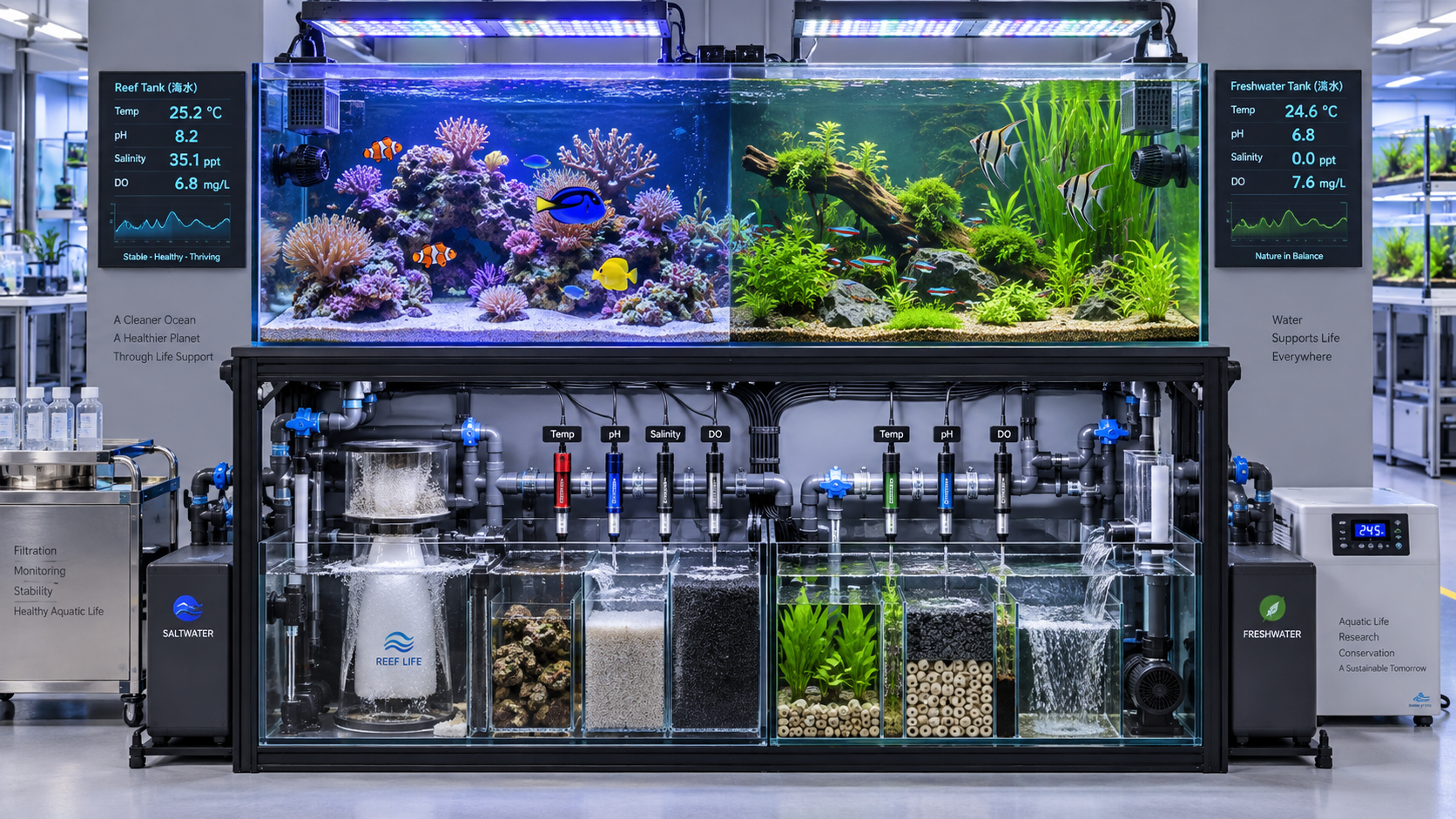
 Choosing an Aquarium Water Parameter Monitor for Stable Reef and Freshwater SystemsSep 25, 2026Aquarium water parameter monitor guide for reef and freshwater systems: compare sensors, accuracy, alarms, maintenance, and automation for reliable water control.
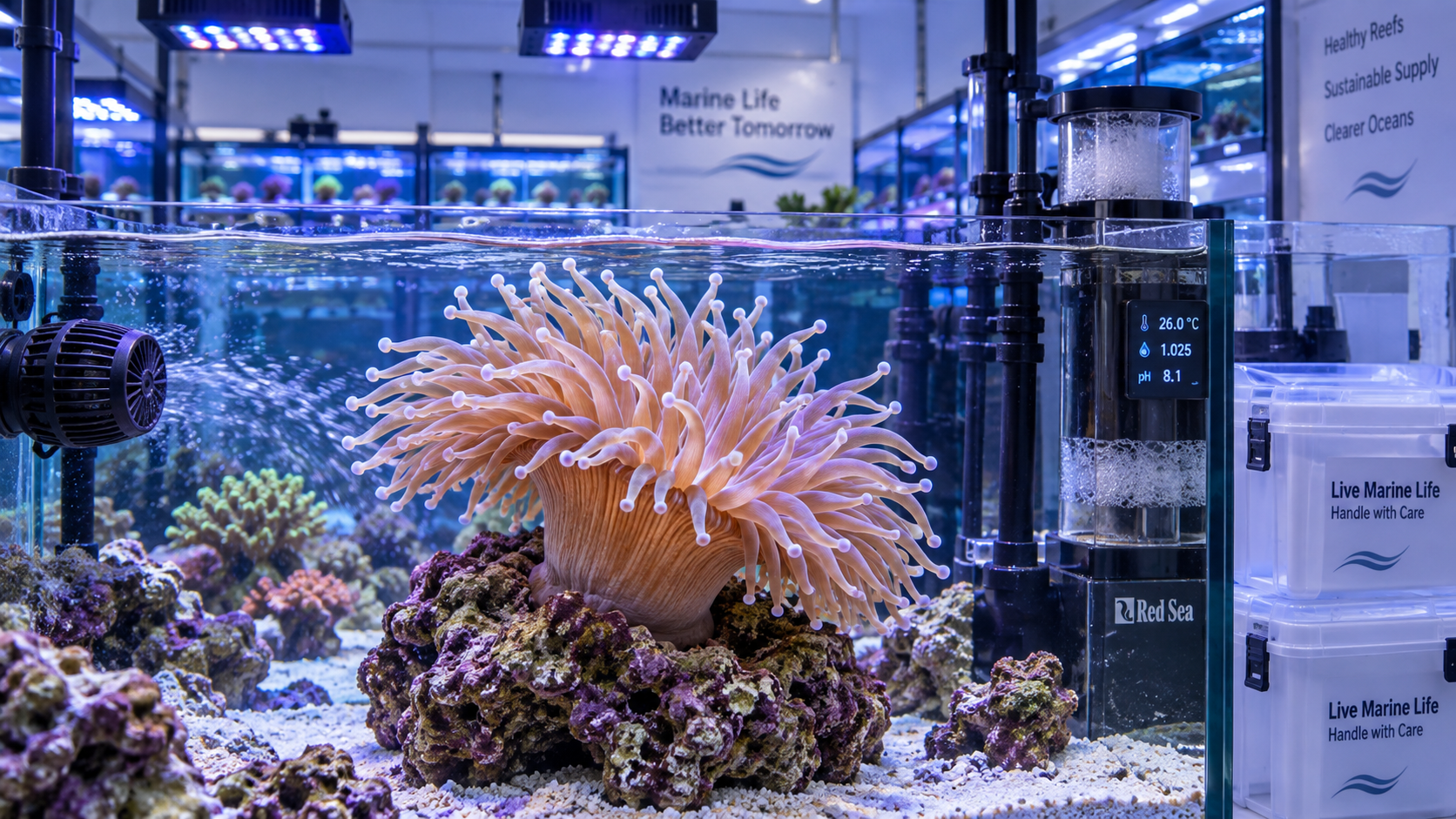
 How to Evaluate an Anemone Aquarium Supplier for Healthy, Stable Livestock?Sep 24, 2026Anemone aquariums supplier evaluation guide: compare livestock health, traceability, water quality, packing, and support for stable, successful arrivals.
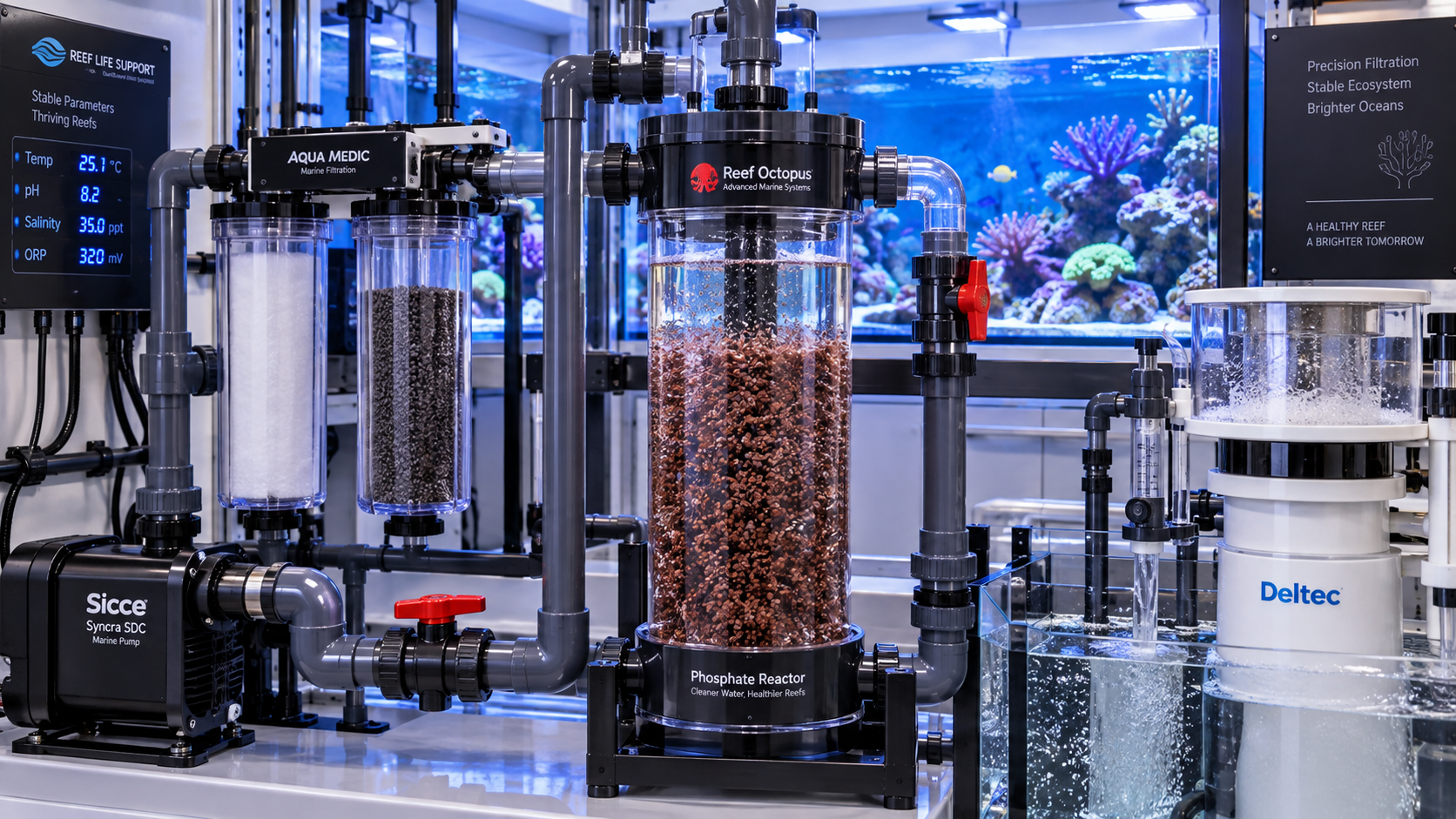
 Chemical Phosphate Removal in Aquariums: Media, Dosing, and Control LimitsSep 23, 2026Chemical phosphate removal for aquariums: compare adsorption media and lanthanum dosing, set safe control limits, and protect livestock with smarter monitoring.
Weekly Insights
Stay ahead with our curated technology reports delivered every Monday.