




Seafood Expo Spotlights Compliance Shift in Fogging Systems




On June 18, 2026, the opening of the 12th Guangdong International Aquatic Products Expo in Zhanjiang brought a commercial signal that goes beyond product display: smart misting systems and biomimetic foggers are increasingly being evaluated through certification and market-entry requirements alongside performance. What deserves closer attention is that overseas buying interest from Southeast Asia, the Middle East, and Latin America is appearing at the same time as a disclosed channel requirement in the Middle East, where high-end reptile retail chains are set to require UL 61010B-1 electrical safety certification for fogging equipment from the second half of 2026. For manufacturers, exporters, distributors, testing-related service providers, and procurement teams, this points to possible changes in specification alignment, certification timing, delivery preparation, and market access review.
What the Expo Actually Confirmed
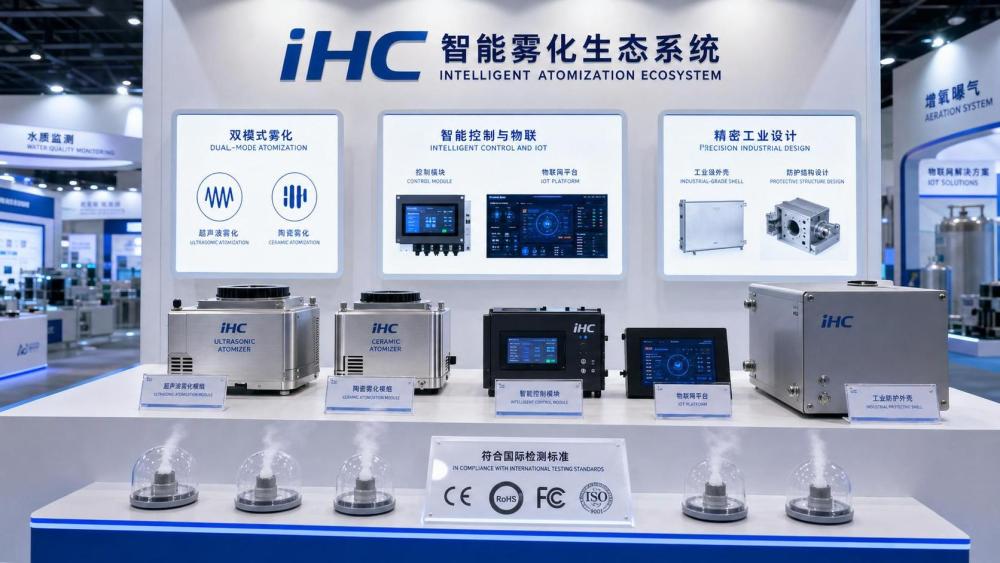
From June 18 to 20, the 12th Guangdong International Aquatic Products Expo is being held in Zhanjiang. Within the Misting & Fogging Systems section, a notable number of importers from Southeast Asia, the Middle East, and Latin America stopped for business discussions.
Multiple suppliers on site displayed smart fogging systems featuring PID humidity closed-loop control and dual-mode output combining ultrasonic and ceramic atomization. At the same time, suppliers presented a pre-certification pathway tied to an FDA 510(k) electronic health module.
The expo also disclosed that, starting in the second half of 2026, high-end reptile retail chains in the Middle East will require fogging equipment to pass UL 61010B-1 electrical safety certification.
Why This Matters Across the Supply Chain
Export offers may need to move from feature-led to compliance-led
From an industry perspective, exporters and direct trading companies may be affected first because overseas buyers are not only comparing humidity control functions and atomization modes, but also screening products through certification readiness. The practical impact is likely to appear in quotation documents, technical datasheets, model selection, and pre-shipment confirmation, especially where buyers ask whether a product can enter a channel with specific electrical safety requirements.
Manufacturing decisions may be pulled forward by certification timing
For manufacturers, the disclosed UL 61010B-1 requirement matters not simply as a label issue but as a possible production planning issue. Analysis shows that once a channel makes certification mandatory, design validation, component selection, technical file preparation, and production scheduling may need to be aligned earlier in the order cycle. This is particularly relevant for systems marketed with smart control functions or modular electronic features.
Channel buyers and distributors may tighten supplier screening
Distributors, importers, and retail-channel procurement teams may face a more structured sourcing process. The likely pressure point is supplier qualification: buyers may need to distinguish between products that are only technically attractive and those that are document-ready for channel entry. In practice, attention may shift toward certification status, test-document availability, and whether suppliers can support follow-up compliance checks during delivery and after-sales stages.
Testing and certification service providers may see earlier involvement
Certification-related firms and testing service providers may also be drawn in earlier. Observably, once procurement conversations begin to include FDA 510(k) pre-certification pathways and a future UL 61010B-1 threshold, service providers may be asked to support document review, test planning, and certification sequencing before orders are finalized rather than after products are already committed for shipment.
Operational Points Companies Should Track Now
Check whether target-market claims match actual certification status
Companies marketing smart misting or fogging equipment should review how product claims are presented in sales materials, technical files, and buyer communications. Analysis shows that where certification pathways are mentioned, the boundary between current status and future readiness should remain clear, especially if sales teams are discussing channel access in overseas markets.
Prepare technical and trade documents for buyer review
What deserves closer attention is the document side of market access. Businesses may need to organize technical specifications, electrical safety records, model documentation, and any available pre-certification materials in a way that supports buyer due diligence. If procurement shifts toward compliance-led screening, incomplete documentation may affect tender alignment, contract negotiation, or shipment scheduling.
Watch for execution language from channels and downstream buyers
The disclosed Middle East requirement is important, but the input does not provide detailed implementation wording, scope definitions, or enforcement procedures. For that reason, companies should closely watch how channel procurement documents, buyer checklists, and order terms describe the UL 61010B-1 requirement in practice rather than assume a uniform execution standard across all transactions.
Reassess lead times where certification affects delivery planning
Exporters and suppliers should also pay attention to delivery risk. If a buyer treats electrical safety certification as a precondition for acceptance, then production release, final inspection, shipment booking, and after-sales support planning may all be affected. At this stage, it is more appropriate to treat this as a planning issue that merits verification in each target order rather than as a fully standardized global rule.
How to Read the Signal Behind the Buying Interest
Analysis shows that this expo update is less about a broad policy change announced by a regulator and more about a market-access signal emerging through procurement behavior and channel requirements. The combination of overseas buyer attention, product displays emphasizing control precision and dual-mode atomization, an FDA 510(k)-related pre-certification pathway, and a disclosed UL 61010B-1 entry threshold suggests that compliance is moving closer to the front end of commercial negotiation.
At the same time, it would be premature to read this as a fully settled rule framework across all export destinations. Observably, the strongest confirmed point in the current information is the disclosed requirement tied to high-end reptile retail chains in the Middle East from the second half of 2026. The broader execution rhythm, buyer interpretation, and downstream adoption still require continued observation.
What This Update Is Best Understood As
This development is best understood as a concrete execution signal from the market rather than a standalone trade headline. The confirmed facts indicate that smart fogging equipment is being discussed not only in terms of product capability but also in terms of certification pathway and channel-entry eligibility. For companies involved in manufacturing, exporting, sourcing, testing, and distribution, the immediate value of this information lies in preparing for possible shifts in procurement documents, compliance review, and delivery conditions.
A neutral reading is that the rule change has not been fully mapped in the input, but the direction of buyer expectations is already visible. That makes the update worth tracking as an early operational signal with direct implications for market access preparation.
Basis of This Article and What Still Needs Verification
This article is generated from the user-provided news title, event date, and event summary. No additional company names, regulatory notices, market figures, policy numbers, or source links have been added beyond the provided information.
For events of this type, relevant source categories usually include official announcements, regulatory releases, customs or trade authority information, industry association updates, standards organization documents, and reporting by established trade media. However, a specific official source link was not provided in the input, so further verification remains necessary.
What still needs continued checking includes any detailed implementation language for the UL 61010B-1 requirement, buyer-side execution standards, possible changes in tender or procurement documents, certification review practices, and how suppliers and channels apply these requirements in actual transactions.
Related News
- How to Evaluate Cloud Remote Monitoring Systems for Multi-Site OperationsAug 18, 2026Cloud Remote Monitoring Systems for multi-site operations: learn how to compare data trust, alerts, permissions, and scalability to choose a platform that cuts risk and improves response.
- How to Choose Humidity Control Systems for a Terrarium Without Over-Misting?Aug 01, 2026Humidity control systems terrarium buyers can trust start with stable airflow, smart timing, and the right enclosure. Learn how to prevent over-misting, mold, and stress with a cleaner setup.
- Humidity Control Systems for Terrariums: Which Sensors and Output Range Matter Most?Jul 14, 2026Humidity Control Systems for terrariums: discover which sensors, output ranges, and control features deliver stable humidity, lower maintenance, and healthier habitats.
- Singapore Eases Import Rules for Smart Misting SystemsJul 12, 2026Singapore eases import rules for smart misting systems, shifting eligible products to record filing. Learn how ISO 8573-1 Class 2 compliance can speed customs and improve delivery planning.
Related Industries
Trending in Tech
 How to Specify Reptile Breeding Equipment for Stable Hatch Rates and BiosecuritySep 18, 2026Reptile breeding equipment guide: specify precise climate control, biosecure design, monitoring, and backup systems for stable hatch rates and scalable operations.
 Selecting Tide Simulation Systems for Public Aquariums: Flow, Scale, and ReliabilitySep 17, 2026Public aquarium Tide Simulation Systems: compare flow design, scale, animal welfare, controls, and maintenance to select reliable, high-impact solutions.
 How to Evaluate a Breeding Incubation Technology Supplier for Hatch Rate ReliabilitySep 16, 2026Breeding Incubation Technology supplier guide: compare stability, sensors, alarms, support, and total cost to achieve more reliable hatch outcomes.



Weekly Insights
Stay ahead with our curated technology reports delivered every Monday.